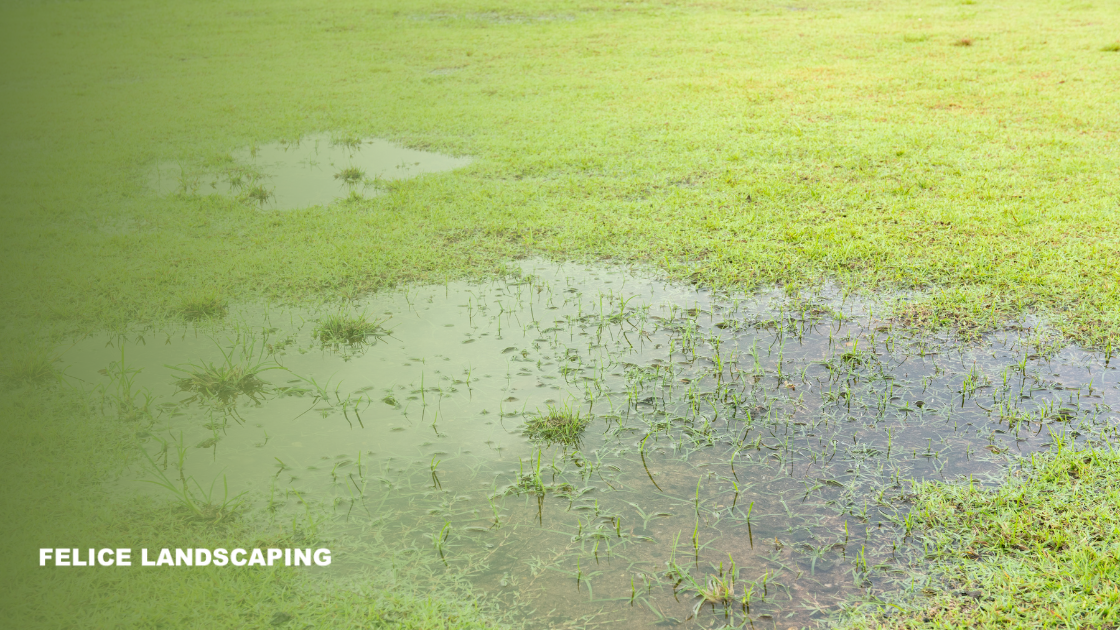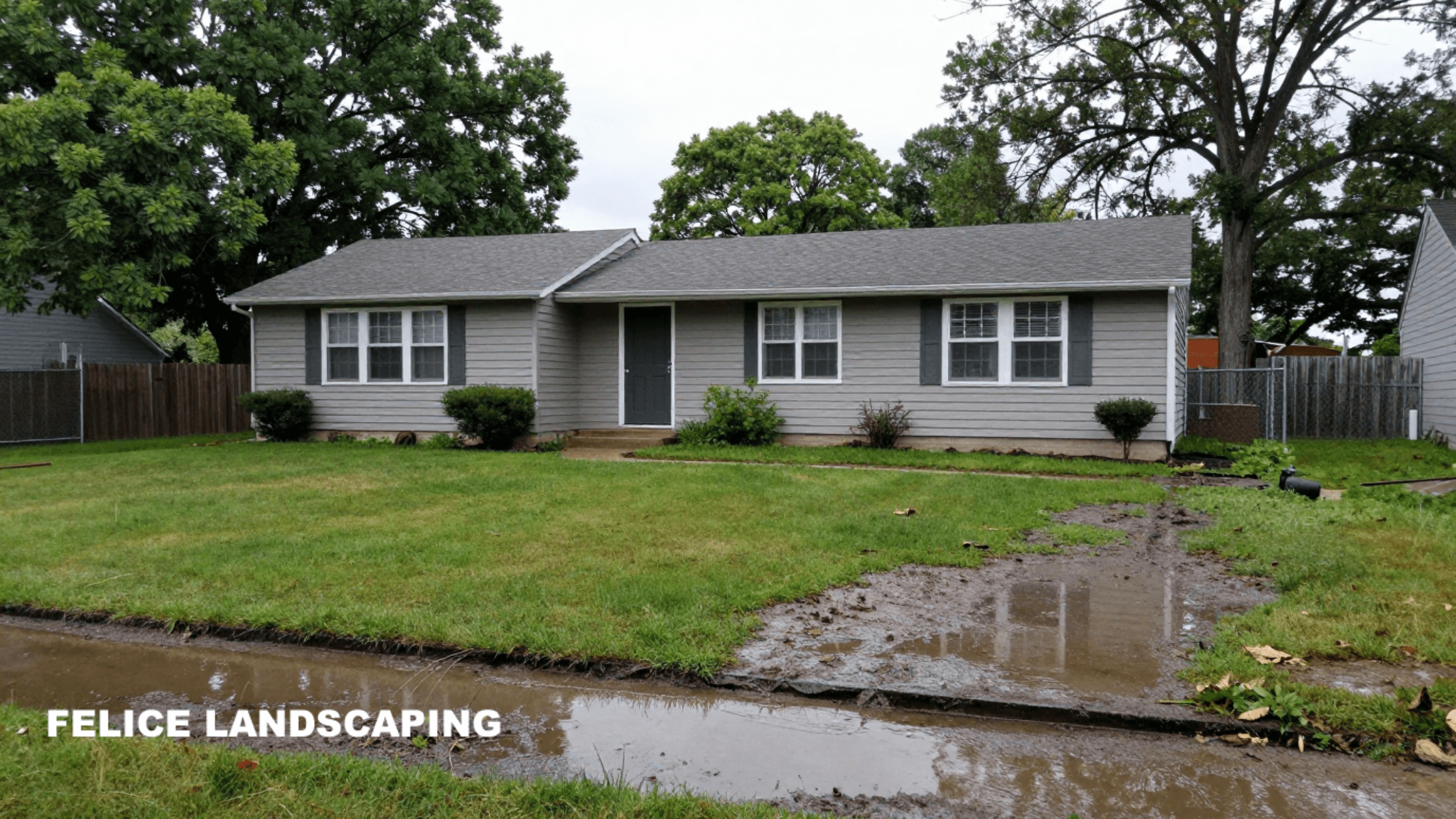
A yard that holds water after every storm is more than an inconvenience. Standing water kills turf, drowns plant roots, breeds mosquitoes, and over time can work its way toward a foundation. Across Westchester County, where clay heavy soil and rolling terrain are common, poor drainage ranks among the most frequent problems homeowners face. The encouraging part is that nearly every drainage issue has a practical fix once the cause is identified correctly.
What Causes Standing Water in a Yard
Water collects for a handful of predictable reasons. Compacted or clay heavy soil absorbs slowly, so rainfall sits on the surface rather than soaking in. Ground that slopes toward the house instead of away from it channels runoff into the worst possible place. Downspouts that empty directly beside the foundation concentrate hundreds of gallons in one spot. The USDA Natural Resources Conservation Service points to soil composition as a primary factor in how quickly ground absorbs water, which is why two neighboring properties can behave very differently.
How Do You Know You Have a Drainage Problem
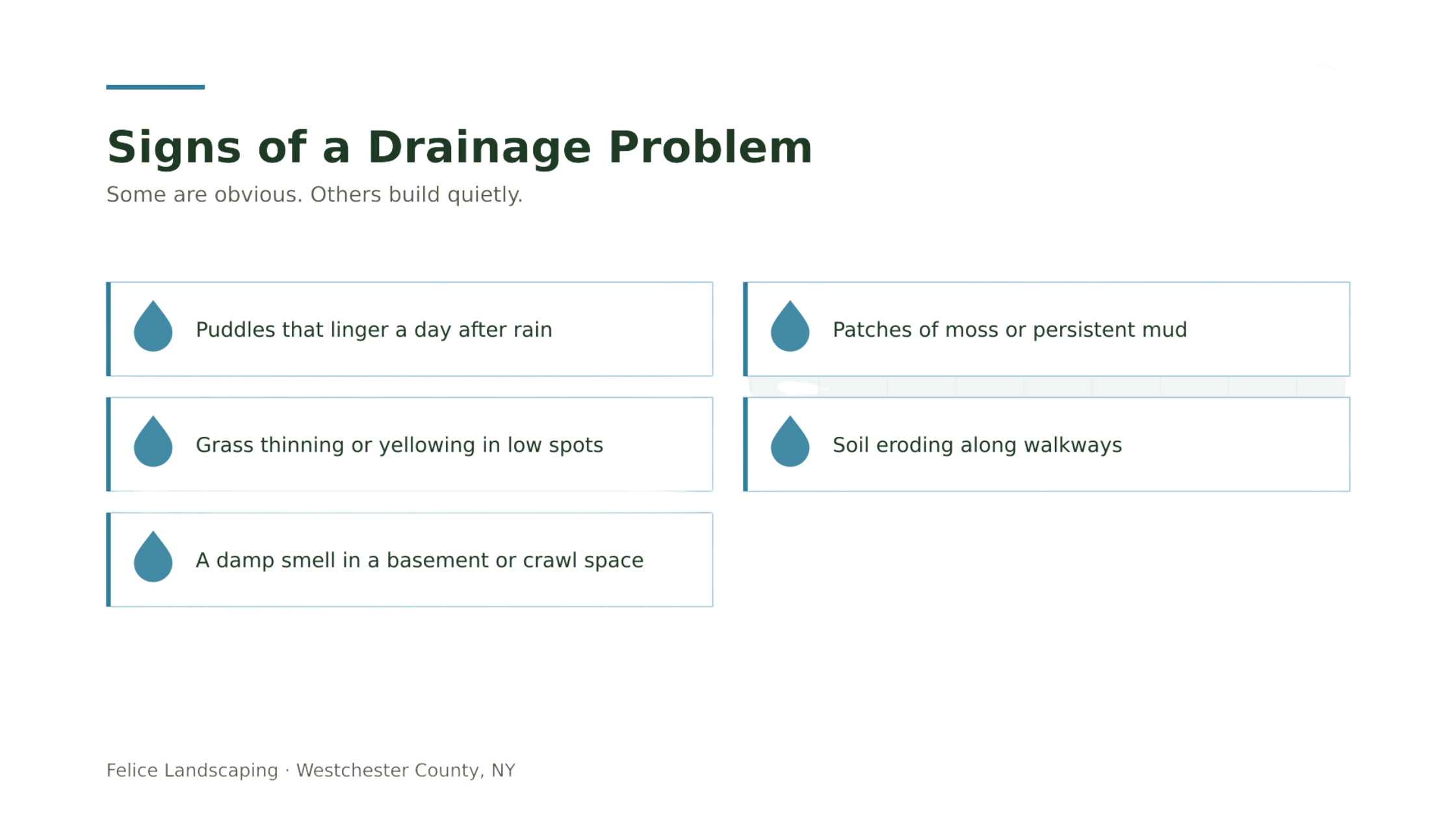
Some signs are obvious and others build quietly. Watch for puddles that linger more than a day after rain, patches of moss or persistent mud, grass that thins or yellows in low areas, soil eroding along walkways, or a damp smell in a basement or crawl space. Any of these suggests water is not leaving the property the way it should.
What Are the Main Yard Drainage Solutions
French Drains
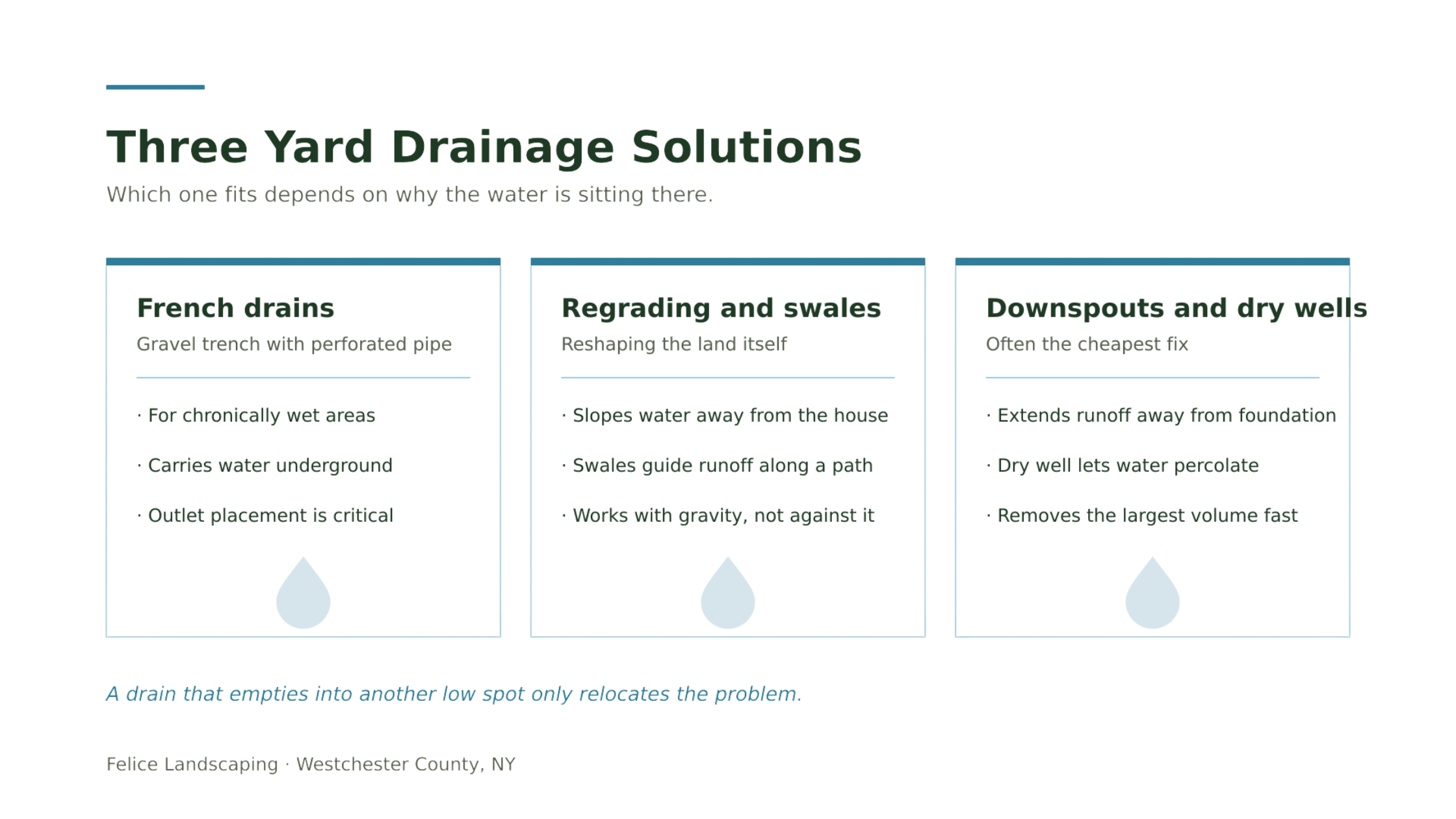
A french drain is a gravel filled trench with a perforated pipe that collects water underground and carries it somewhere safe. It is the standard answer for a chronically wet area, a soggy low spot, or water pushing against a foundation wall. Placement and outlet matter enormously, since a drain that discharges into another low area simply relocates the problem.
Regrading and Swales
Sometimes the fix is the shape of the land itself. Regrading reestablishes a gentle slope away from the house, while a swale is a shallow, planted channel that guides runoff along a deliberate path. Both work with gravity rather than against it, and the Environmental Protection Agency encourages directing runoff toward planted areas that can absorb it rather than sending everything to the street.
Downspout Extensions and Dry Wells
Often the least expensive improvement is also the most effective. Extending downspouts well away from the foundation, or tying them into a buried dry well that holds water while it percolates into the soil, removes an enormous volume of runoff from the area where it does the most damage.
Can You Fix Yard Drainage Yourself
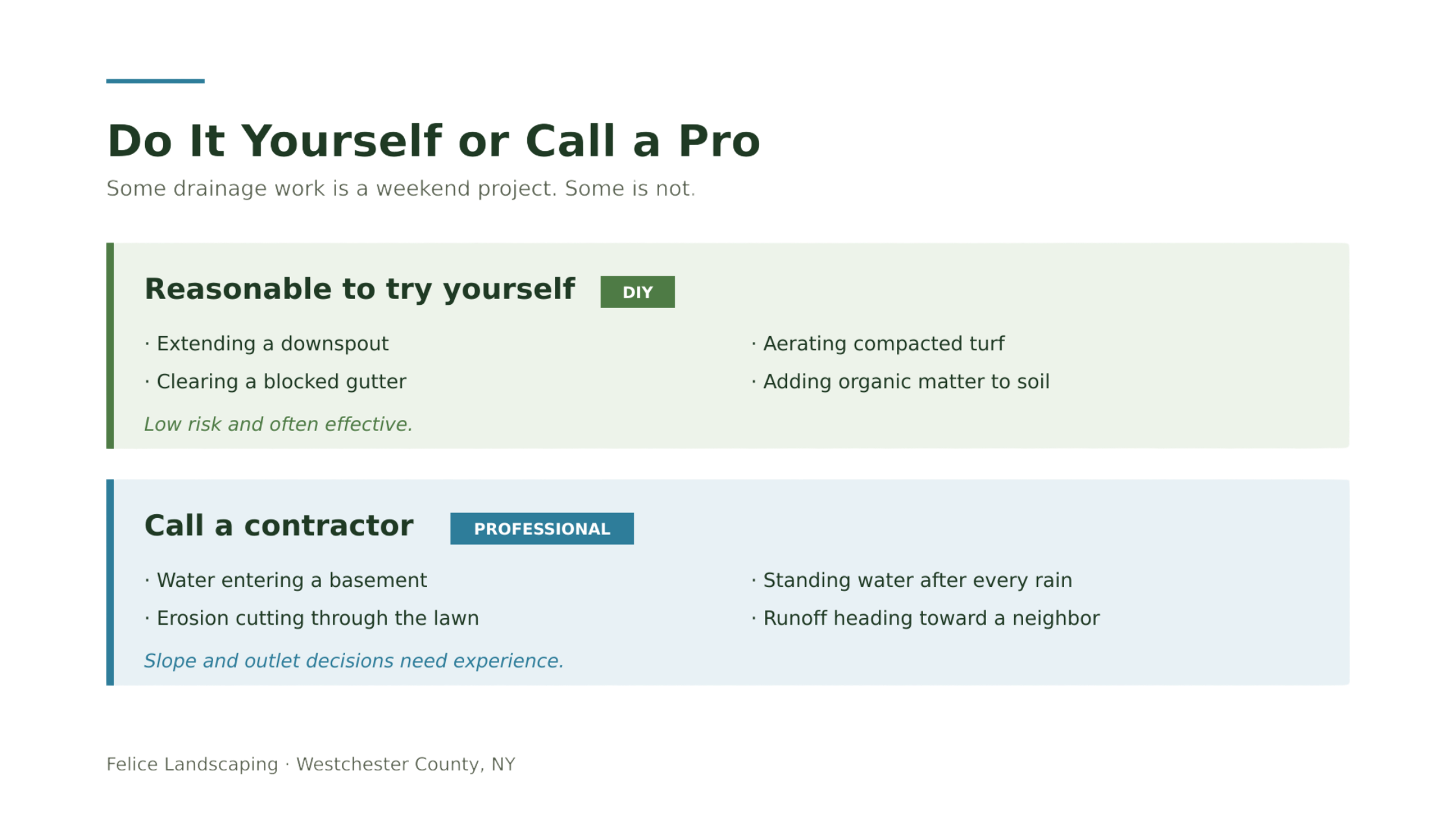
Some of it, yes. Extending a downspout, clearing a blocked gutter, aerating compacted turf, and adding organic matter to improve absorption are all reasonable weekend projects. Larger work is a different matter. Regrading, trenching, and installing a drain require reading the property slope accurately and knowing where the water will ultimately go. Guidance from Cornell University and its regional extension programs is useful for understanding local soil behavior before deciding how far to take a project.
When Should You Call a Drainage Contractor
Certain situations call for professional help rather than experimentation:
- Water entering a basement, crawl space, or garage.
- Standing water that returns after every rainfall.
- Erosion cutting through a lawn, bed, or walkway.
- Slopes, retaining walls, or septic systems anywhere near the wet area.
- Any solution that would send water toward a neighboring property.
That last point matters more than most homeowners expect. Drainage work that pushes runoff onto adjacent land can create real disputes, so a professional plan considers where water goes after it leaves the yard.
Yard Drainage in Westchester County
Felice Landscaping has worked with Westchester soil and terrain since 1961 and provides drainage landscaping across the county, from french drains and regrading to full runoff management. Homeowners can review completed local projects or contact the team to have a wet yard assessed properly before the next heavy rain.