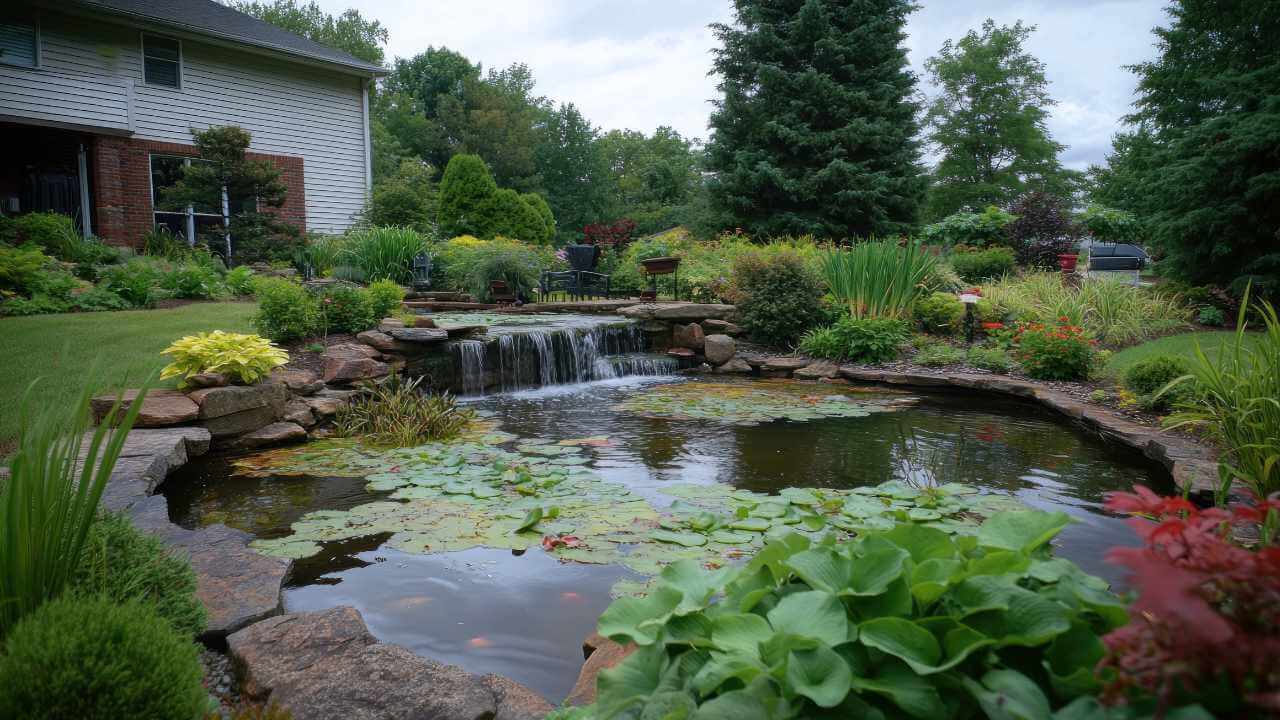
If you think your pond smells bad, you are not the first homeowner in Mamaroneck to deal with this issue. A healthy pond usually has a light, earthy scent, but once that scent turns sour, swampy, or like rotten eggs, it means something in the water is out of balance.
In most cases, the real issue is low oxygen, too much decaying organic matter, excess nutrients, or a mix of all three. Odors can also appear when trapped gases rise from the bottom during seasonal turnover or in warmer weather.
Preventing Pond Odor
From a landscaper’s point of view, bad pond odor rarely starts with the smell itself. It usually starts earlier, when leaves, grass clippings, fish waste, and sludge build up quietly on the bottom. As that material breaks down, oxygen is consumed. Then the pond shifts toward anaerobic conditions, when foul-smelling gases and poor water quality begin to appear.
Excess nutrients can also feed algae growth, and when algae die off, decomposition puts even more pressure on oxygen levels.
Rotten Egg Smell Emitting From Pond
That sharp, rotten-egg odor often points to hydrogen sulfide, a gas associated with oxygen-poor conditions. It is one of the clearest signs that the pond bottom has too much muck and not enough circulation. Sometimes homeowners assume the fix is just to add fragrance, dye, or a quick treatment. In reality, if the sludge stays in place and the oxygen problem persists, the smell usually returns.
How to fix pond odor naturally?
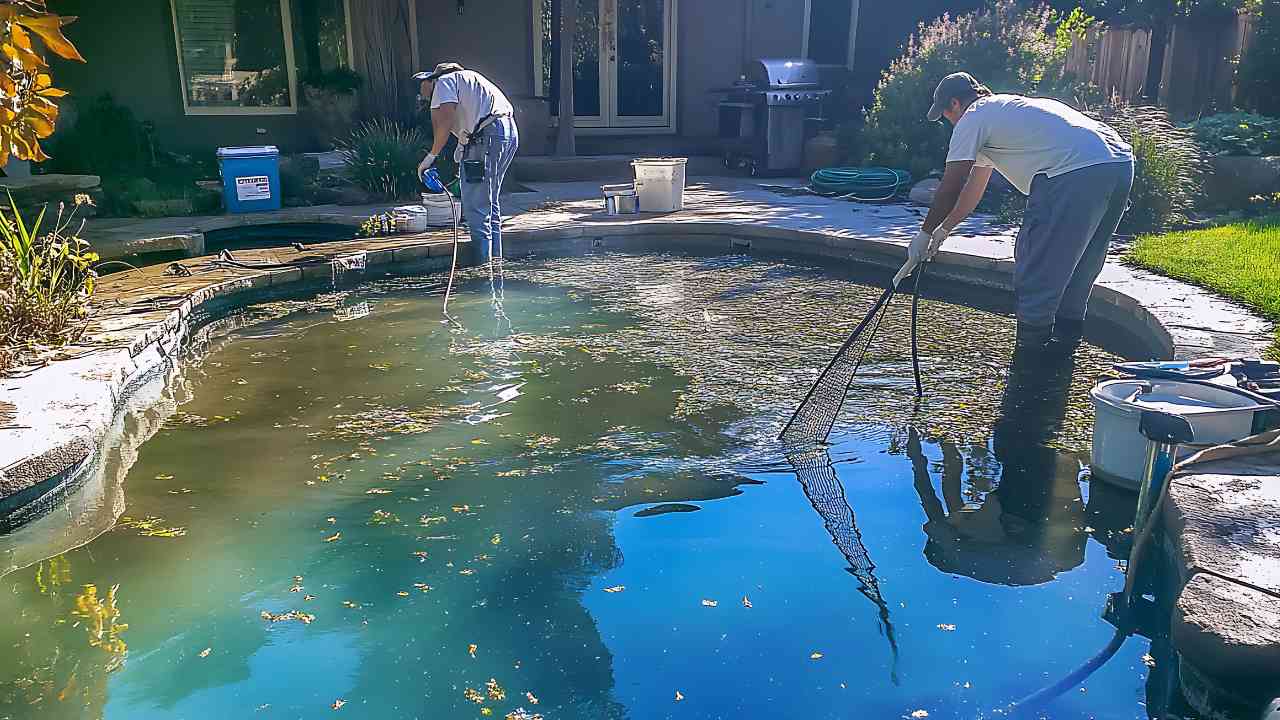
The first step is cleanup. Skim out leaves, dead plant material, and anything else rotting in the water.
After that, look at circulation. Aeration is one of the most effective natural ways to remove pond odor because it increases dissolved oxygen, mixes the water column, and supports healthier biological activity in deeper water. When a pond keeps going stagnant, no surface-level fix lasts very long.
Best Bacteria For Smelly Pond Water
The best bacteria for smelly pond water is not a one-size-fits-all product. Beneficial bacteria can help digest soft organic buildup, but they work best when the pond already has sufficient oxygen and the nutrient source is controlled.
If runoff keeps feeding the pond and the bottom is packed with old sludge, bacteria alone will not solve the problem. Think of them as part of the plan, not the whole plan. That is the kind of nuance a seasoned landscaper in Mamaroneck, New York, should give you.
How to keep the smell from coming back?
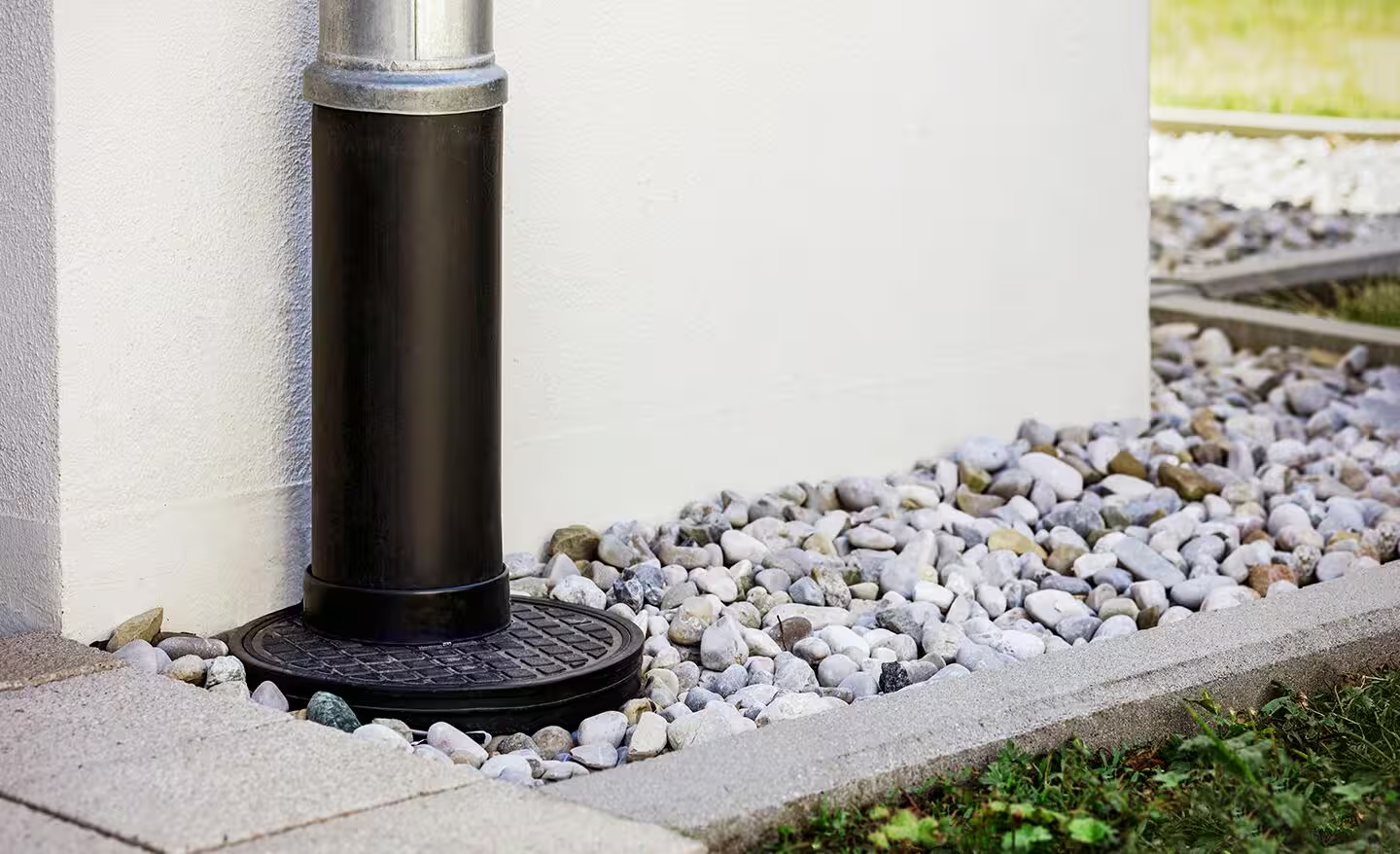
Long-term pond care is really watershed care. If fertilizer, sediment, and organic debris keep washing in, the odor cycle starts over. A vegetated buffer around the pond helps trap nutrients and sediment before they reach the water. Penn State Extension recommends buffer strips around ponds and notes that aeration and nutrient control both support healthier pond conditions.
For deeper reading, Penn State Extension, the U.S. EPA, and the University of Maryland Extension all offer useful guidance on oxygen, runoff, algae, and odor-related pond issues.
When is it time to bring in a pro?
If the pond smells bad for more than a few days, if fish seem stressed, or if the water looks thick, dark, or covered in algae, it is smart to have it assessed. Felice Landscaping is a third-generation family-owned company in Mamaroneck that serves Westchester County and offers waterscape and related landscape services from its base on Lester Avenue.
A smelly pond is usually a warning sign, not a mystery. Once you remove decaying debris, improve aeration, reduce runoff, and use bacteria properly, the water often turns around faster than people expect. The goal is not just to mask odor. It is to restore balance so the pond looks, smells, and feels healthy again.