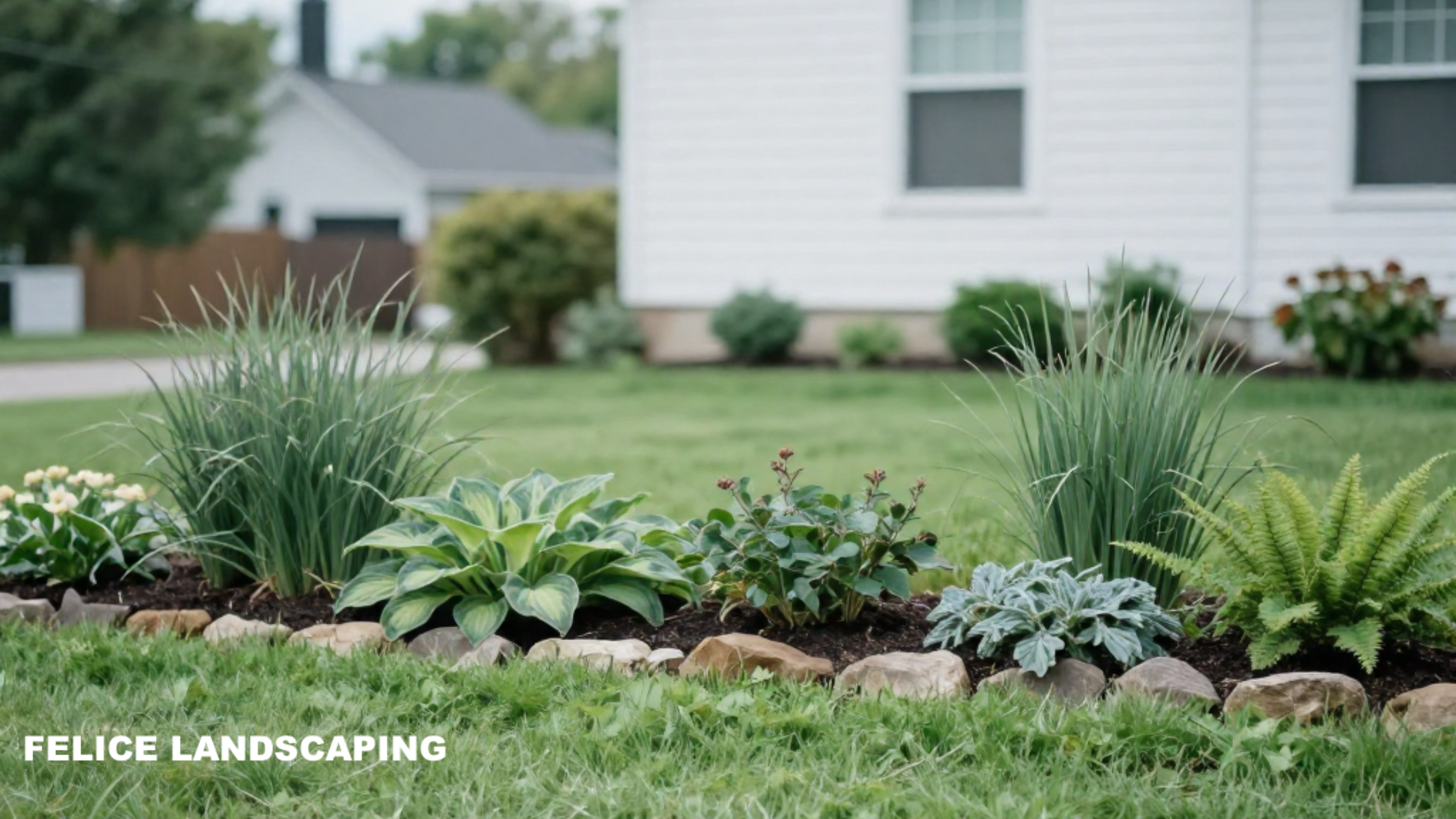
Not every property has room for towering trees and sweeping garden beds, and that limitation is far from a drawback. Chosen with care and arranged with intention, small plants can make a narrow border, a tight entryway, or a modest backyard feel lush and thoughtfully composed. In many ways, a smaller palette demands the very discipline that makes a landscape memorable.
Why Small Plants
Compact plants bring a flexibility that larger specimens simply cannot. They tuck neatly into spots where a full sized shrub would crowd a walkway or shade a window. They move easily as a design evolves, and they build rich layers of color and texture within a modest footprint, all while keeping a small yard feeling open rather than overgrown. Their smaller price tag is another quiet advantage, since planting in generous groupings rarely strains a budget the way a few large specimens might.
Flowering Picks
For seasonal color, compact bloomers are hard to top. Dwarf coneflower, creeping phlox, coreopsis, and compact daylilies deliver vivid displays without overtaking a bed. Planting several of one variety together reads as a confident splash rather than a scatter. The Old Farmer’s Almanac offers reliable bloom and hardiness guidance for the region.
Compact Shrubs
Slow growing shrubs such as boxwood, dwarf hydrangea, spirea, and compact holly lend year round structure and a sense of permanence. They shine as low borders and foundation plantings, anchoring the seasonal color that comes and goes around them. The Royal Horticultural Society catalogs many dwarf varieties suited to small gardens.
Ground Cover
To knit a design together, low spreading plants like creeping thyme, sedum, liriope, and vinca fill gaps, suppress weeds, and soften the hard edges of paths and patios. They prove especially valuable on slopes and in the narrow strips where turf tends to struggle, as the National Gardening Association frequently notes.
Design Ideas
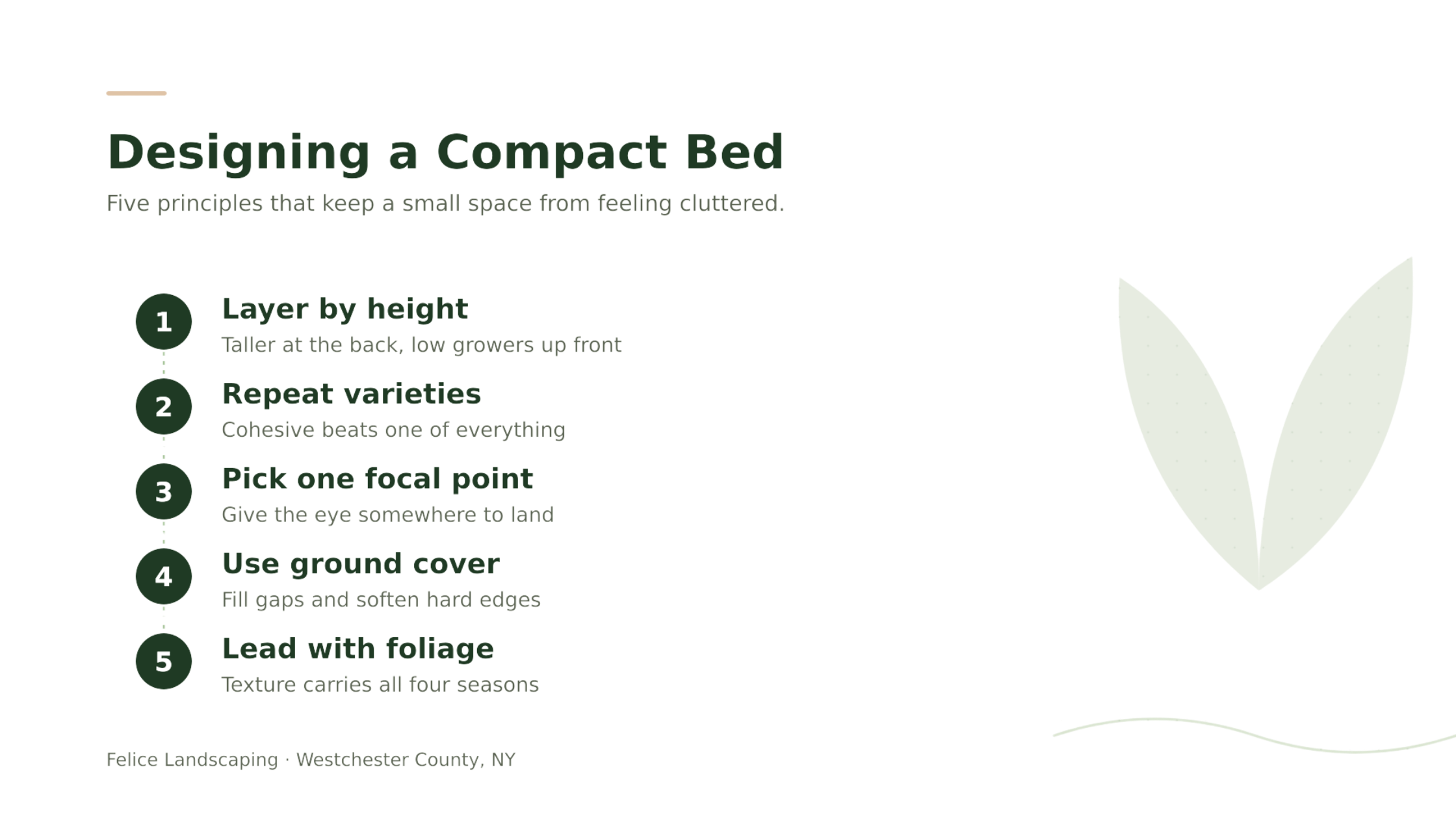
A few principles make compact plantings sing. Layering by height, with taller plants set toward the back and low growers up front, creates welcome depth. Repeating a handful of varieties throughout the space looks cohesive, whereas one of everything tends to look cluttered. A single focal point, perhaps a specimen shrub or a bold container, gives the eye somewhere to land and anchors the whole arrangement. Containers add greenery where open soil is scarce, and rotating a few seasonal bloomers keeps the display fresh from spring through fall. Above all, a focus on foliage color and texture keeps interest alive across all four seasons, long after the flowers have faded.
Care Tips
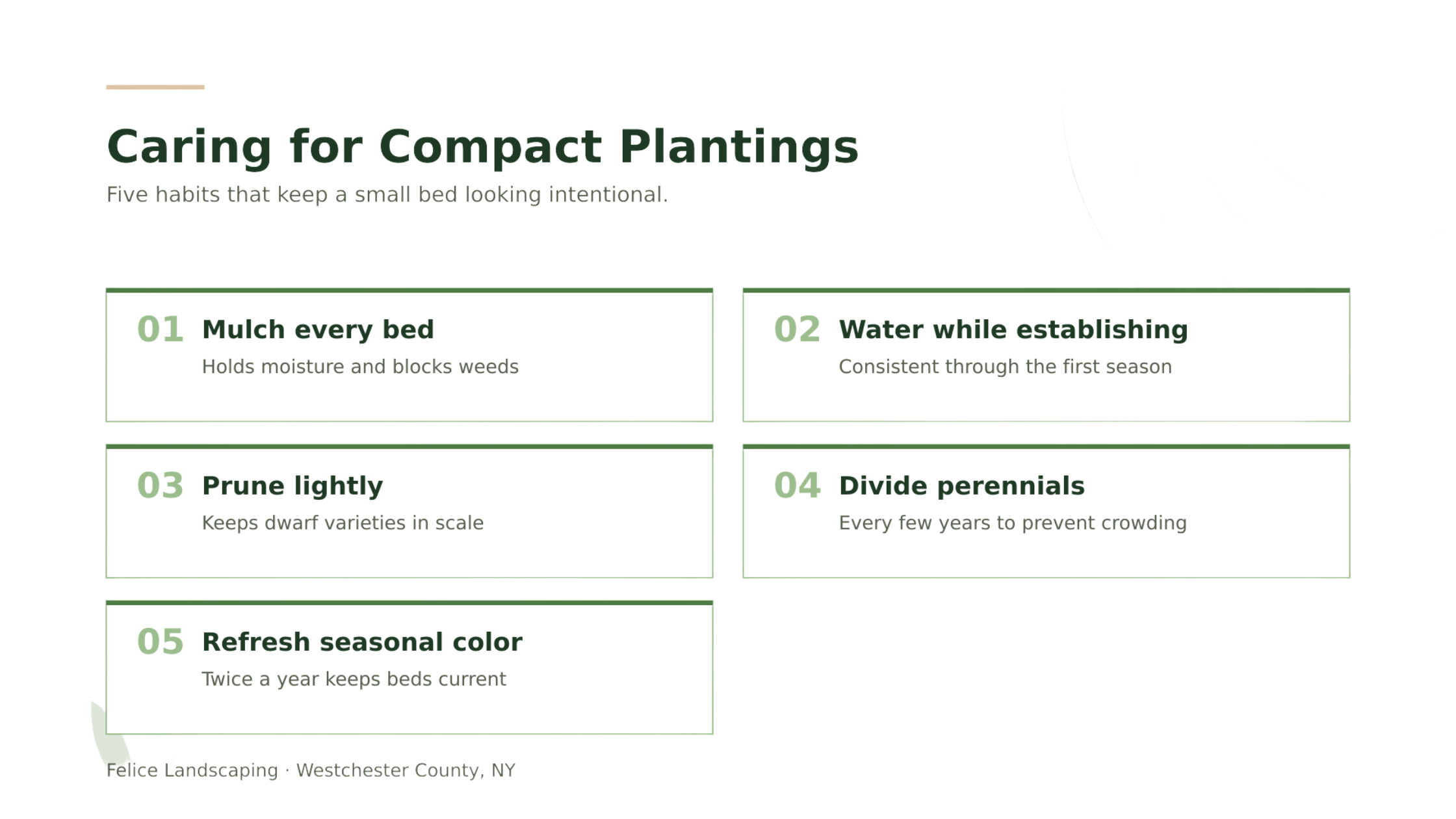
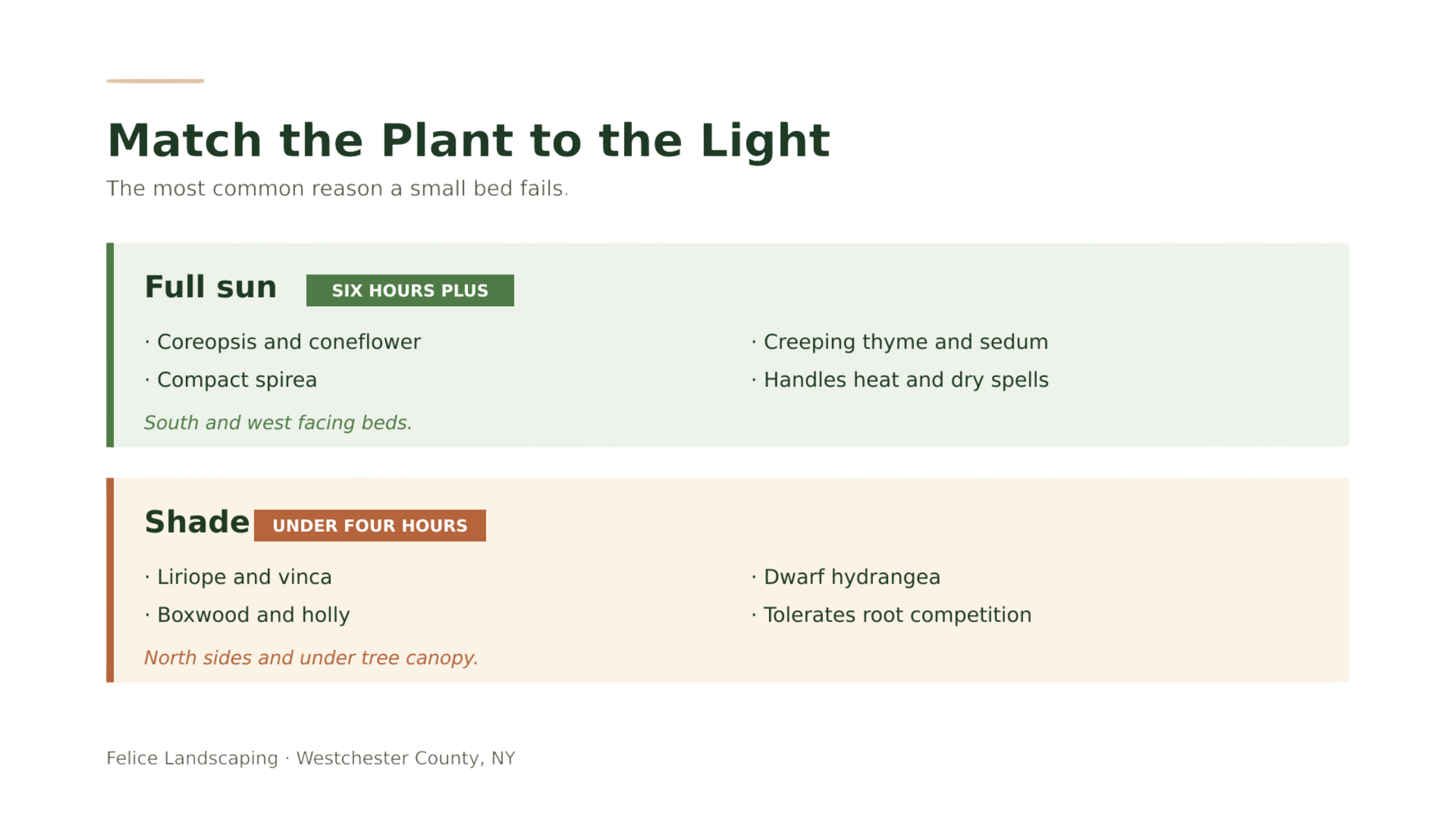
Matching each plant to its light conditions comes first, since sun lovers and shade dwellers have very different needs. Mulch helps beds hold moisture and hold back weeds, watering should stay consistent while plants establish, and light pruning keeps compact varieties tidy and in scale.
Get Help
Small spaces reward good design more than almost any other setting. For homeowners who want a compact landscape that flourishes in the Westchester climate, the team at Felice Landscaping is ready to help and welcomes a call to plan a consultation.